Wednesday, September 25, 2013

Kidney Stone Prevention

Medindia Health News
Medindia largest health website in india. // via fulltextrssfeed.com 
#1 Retargeting Platform

Our Average Customer Earns $10 For Every $1 Spent
From our sponsors
Kidney Stone Prevention
Sep 25th 2013, 11:08

What are Kidney Stones?

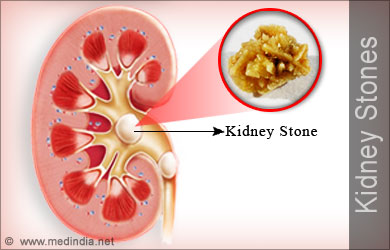
Kidney stones are small stones that develop in urine containing increased levels of calcium, phosphorus, uric acid, or cystine. Kidney stones can be formed due to the following reasons:


Insufficient fluid in the urine to dissolve stones

Kidney Stone Prevention / How to Prevent Kidney Stone


Disease conditions (eg, parathyroidism)

Genetic condition (cystinuria)

Digestive tract conditions like chronic diarrhea

Kidney Stones Formation: Diarrhea


Intake of certain medications

Recurrent infections and blockage of the urinary tract

Diet rich in sodium, meat products and/or calcium supplements

Kidney stones vary in shape and size. They may range from small, sand-shaped grains to large golf-balls. They can be smooth or jagged-edged. They cause severe pain, which may be associated with nausea, vomiting and passage of blood in the urine.

Types of kidney stones

There are 4 main types of kidney stones.

Calcium stones: They account for 80% of kidney stones. Calcium intake in individuals is common. However, in certain individuals, the extra calcium aggregates to form stones in the urine. Calcium stones then aggregate with other wastes and form larger stones. There are 2 types of calcium stones: calcium oxalate and calcium phosphate. Disease conditions such as hyperparathyroidism can cause calcium stones.

Cystine stones: Individuals with a genetic condition called cysteinuria are predisposed to increased excretion of cystine into the urine, resulting in cystine stones.

These stones account for less than 1% of kidney stones.

Struvite stones: These are formed following infection of the kidneys and account for 10-15% of kidney stones. Women show a greater predisposition to form struvite stones due to increased infections in the urinary tract. Struvite stones lead to internal complications and may require surgical intervention. Large struvite stones (staghorn calculi) can affect kidneys.

Uric acid stones: Increased levels of acid in the urine can cause uric acid stones, which form 5% of kidney stones. A non-vegetarian diet (meat, fish) can cause uric acid stones.

Consumption of alcohol, reduced urination, inflamed bowel conditions, gout, and genetic factors can also cause uric acid stones

Diet to Prevent Kidney Stones

Doctors recommend drinking lots of water and other fluids to prevent formation of all types of kidney stones. A person should produce approximately 2 liters of urine each day.

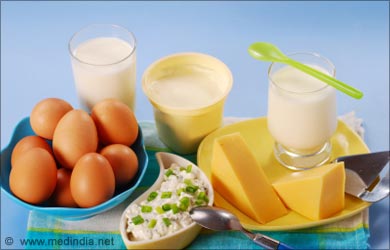
Calcium-rich foods: Oxalate-rich foods such as spinach, nuts, tea, beets, soy-based products, sweet potatoes, and lady's finger should be avoided. One should take calcium supplements cautiously as they tend to increase the risk of kidney stones. However, use of calcium products such as milk, cheese, etc does not increase the risk of kidney stones unless otherwise stated by a physician.

Diet to Prevent Kidney Stones: Calcium-rich Foods


Sodium and meat-products: Food rich in sodium and animal products should be eaten moderately. Lentil-based diets are preferred over meat products.

Medications to Prevent Kidney Stones

Uric Acid Stones: Allopurinol that prevents the synthesis of uric acid or an alkalizing agent to increase the alkalinity of the urine and dissolve stones may be prescribed.

Calcium Stones: A phosphate containing mediation or a thiazide diuretic may be prescribed.

Struvite Stones: Infection causes the formation of struvite stones. Hence, long-term use of antibiotics in small doses is recommended.

Medications to Prevent Kidney Stones: Antibiotics


When stones are large or block the urinary tract, the following 4 options may be utilized.

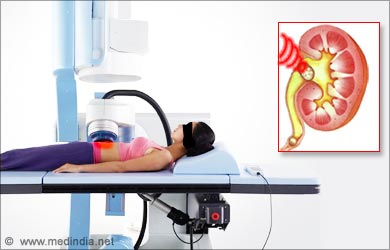
Extracorporeal Shock Wave Lithotripsy (ESWL)

The patient is treated with shock waves, directed towards the dense kidney stone. Repeated shock waves cause the stone to crumble, facilitating easy elimination through urine. Sometimes, a stent needs to be inserted to facilitate removal of the crushed kidney stone. Patients require repeat procedures if ESWL does not eradicate all the stones in one session. Calcium oxalate monohydrate and cystine stones are resistant to ESWL treatment. Patients who are obese, pregnant, have bleeding disorders or urinary tract infections cannot avail the use of ESWL.

Treatment to Prevent Kidney Stones: Extracorporeal Shock Wave Lithotripsy


Ureteroscopy (URS)

This treatment involves the use of a fiber-optic instrument, a ureteroscope, to progress up the ureter via the bladder and visualize the stones present in the ureter. Once identified, a basket-like device can be used to capture the stones and remove them. If stones are large, laser surgery is used. A stent is normally inserted to keep the ureter patent. The patient can return home the same day and resume a normal routine in 2-3 days. The stent is removed in 1-3 weeks.

Treatment to Prevent Kidney Stones: Ureteroscopy


Percutaneous Nephrolithotomy (PNL)

Removal of large kidney stones can be done with an instrument called a nephroscope. The nephroscope is inserted into the kidney through a small incision in the back and stones are located. Laser beams are used to crush kidney stones. This procedure is normally recommended when ESWL or URS have not been successful in removing large stones. The PNL procedure is preferred over open surgery due to the small incision that is made.

Open Surgery

Large incisions are made in the kidney in order to remove the stones. Patients have a longer recuperation time in hospitals (approximately a week), compared to the other procedures. Patients are advised to drink a lot of water to increase the volume (approximately 2 liters a day) of urine excreted.

Treatment to Prevent Kidney Stones: Surgery


Parathyroid Gland Surgery

A benign tumor formed in the parathyroid glands can cause excess secretion of the parathyroid hormone (hyperparathyroidism). As a result, calcium levels increase causing the formation of kidney stones. Doctors may suggest removing the tumor or treating the hyperparathyroidism with medications.

You are receiving this email because you subscribed to this feed at blogtrottr.com.

If you no longer wish to receive these emails, you can unsubscribe from this feed, or manage all your subscriptions

No comments:

Post a Comment